AI vs. Screen Time: Why Hands-On AI Activities Are Different
Is using AI with your kids just more screen time? Here's why hands-on AI activities are fundamentally different from passive scrolling, and why they're worth your family's time.

If you're a parent who worries about screen time (and you should be), the idea of adding another screen-based activity to your kid's life probably makes you cringe. Fair enough. But hands-on AI activities are fundamentally different from scrolling social media or binge-watching YouTube. The distinction isn't about the screen. It's about what your kid's brain is doing while they stare at it.
The Difference That Matters: Active vs. Passive
Not all screen time is the same. Researchers and pediatricians have been saying this for years, but it's worth being specific about what the difference actually looks like.
Passive screen time is consumption. Your kid is watching, scrolling, absorbing. They're not making decisions, creating anything, or engaging their critical thinking. Their brain is in receive mode. This is TikTok, YouTube autoplay, mindless game loops, and most social media.
Active screen time is creation. Your kid is writing, designing, planning, solving, evaluating, and producing something. Their brain is in build mode. This is coding, writing, digital art, research for a project, and (when done well) AI activities.
The same device can host both. The question is never "is my kid using a screen?" It's "what is my kid doing with it?"
What Happens During an AI Activity
Let's walk through what actually happens when a kid does a Big Thinkers-style AI activity, like planning a dream vacation using AI.
Minute 1-5: They choose a destination. This is a creative decision. Where in the world do they want to go? Why? Already they're thinking about geography, preferences, and what they care about.
Minute 5-15: They write a prompt. This requires them to think about what information AI needs: Who's going? What do they like? When are they traveling? How long? What's the budget? They're organizing their thoughts and communicating clearly, a writing skill that transfers to every other context.
Minute 15-25: They read AI's response and evaluate it. Is this itinerary realistic? Are these real places? Does this make sense for their family? They're practicing critical thinking, fact-checking, and editorial judgment.
Minute 25-35: They refine. "Add a rainy day plan." "This restaurant doesn't look kid-friendly, suggest something different." "What if we only have $100 per day?" They're iterating, problem-solving, and advocating for what they want.
The whole time: You're sitting next to them, asking questions, helping evaluate, adding your own ideas. It's a conversation.
Now compare that to 35 minutes of scrolling Instagram. The contrast isn't subtle.
The Brain Science (Simplified)
You don't need a neuroscience degree, but the basics are helpful.
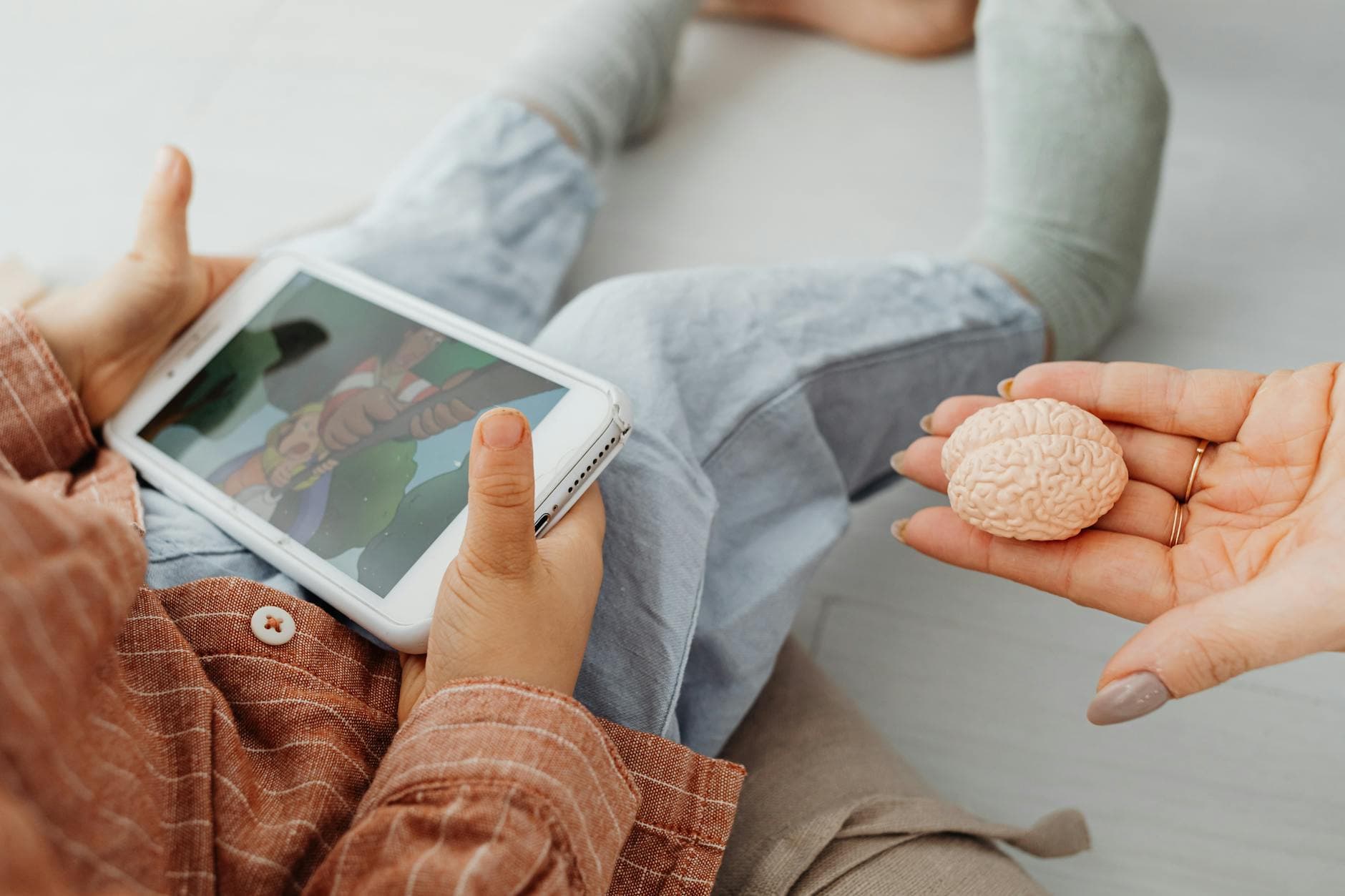
Passive consumption activates the brain's default mode network, the parts associated with mind-wandering and low-effort processing. This isn't inherently bad (daydreaming has value), but extended periods of passive consumption are linked to reduced attention span, decreased motivation, and increased anxiety in kids.
Active creation activates the prefrontal cortex, the parts responsible for planning, decision-making, problem-solving, and self-regulation. These are the executive functions that parents and teachers are constantly trying to develop in kids. When your child is writing prompts, evaluating output, and iterating on results, they're exercising exactly these skills.
The short version: scrolling makes your kid's brain idle. Building with AI makes it work.
The "Together" Factor
Here's the part most screen time discussions miss: who else is in the room matters enormously.
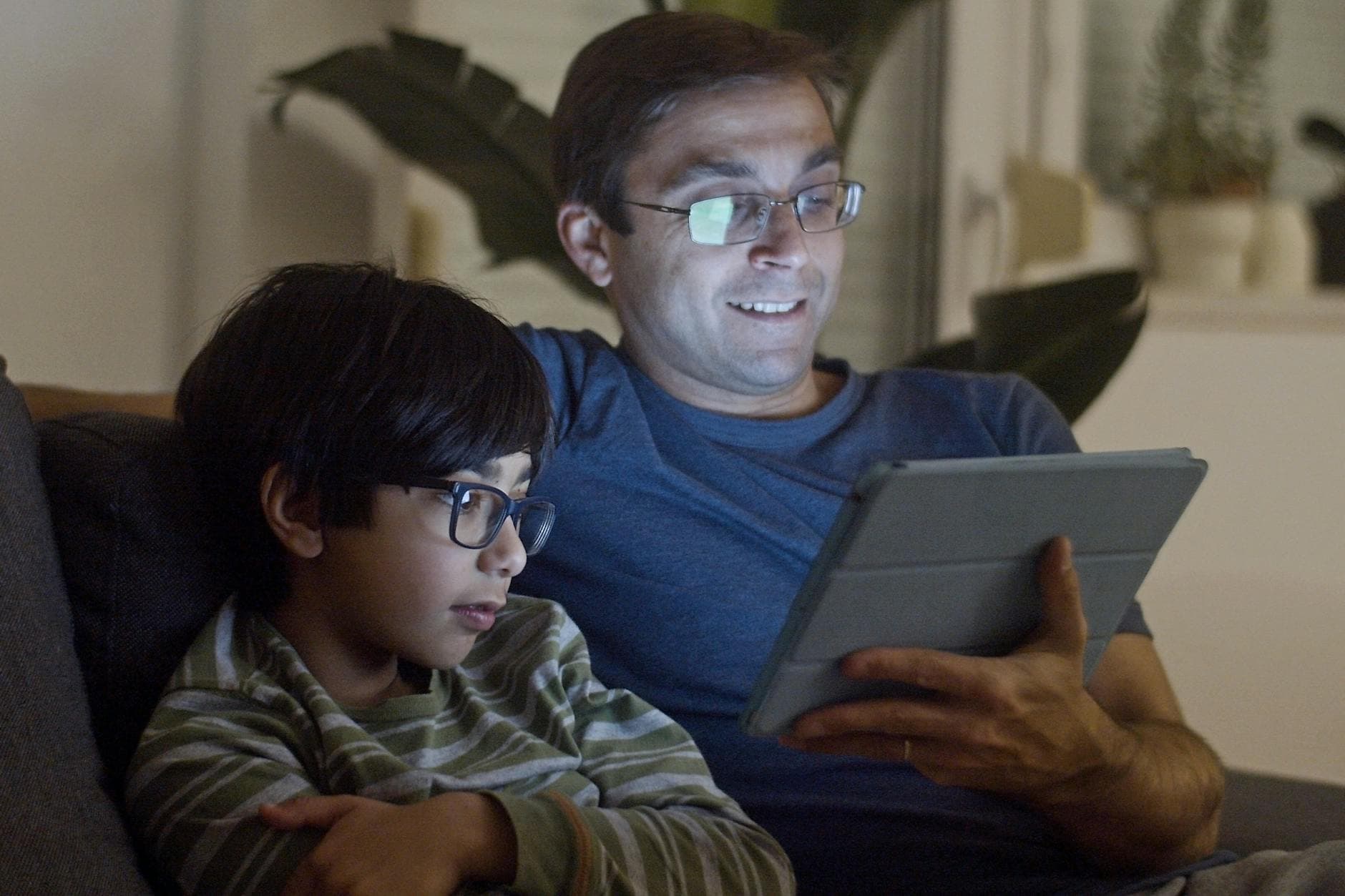
A kid watching YouTube alone is having a solitary, passive experience. A kid using AI with a parent is having a social, active experience. You're talking, debating, laughing at AI's weird suggestions, and building something together.
Research consistently shows that shared media experiences (where a parent is actively engaged, not just present) produce better outcomes than solo use. The screen becomes a conversation starter, not a conversation ender.
This is why Big Thinkers activities are designed as parent-led experiences, not kid-alone software. The value isn't just in what your kid learns about AI. It's in the 30-60 minutes of focused, collaborative time you spend together.
When AI Activities Can Become Bad Screen Time
Let's be honest: AI activities aren't automatically better than other screen time. They become bad screen time when:
- Your kid uses AI passively. If they type "write me an essay" and copy the result without reading it critically, that's not learning. That's outsourcing their thinking.
- There's no conversation. If your kid is using AI alone with no one to discuss the output with, they miss the critical thinking component.
- It replaces physical activity and real-world play. AI activities are great. They should not replace outdoor time, physical play, reading physical books, or unstructured imaginative play. They're one part of a balanced week, not the whole thing.
- Sessions drag on too long. Thirty to sixty minutes is a great AI session. Three hours is too much of anything screen-based, no matter how educational.
The guardrails are the same ones good parents already use: time limits, involvement, variety, and paying attention to how your kid feels after.
A Framework for Evaluating Any Screen Activity
Next time you're deciding whether a screen-based activity is worth your family's time, ask these four questions:
- Is my kid creating or consuming? If they're producing something (a plan, a story, a design, a quiz), it's active. If they're just watching or scrolling, it's passive.
- Is my kid making decisions? Good screen activities require choices: what to do, how to respond, what to change. If the app or tool is making all the decisions, your kid is along for the ride.
- Can we do this together? Activities that invite parent participation are almost always better than solo-screen activities. Shared experiences produce better learning and better relationships.
- Does my kid have something to show for it? After the screen turns off, is there an artifact (a story, a trip plan, a drawing, a quiz they made)? If yes, the time was productive. If all they have is a vague memory of things they watched, it probably wasn't.
AI activities, done the Big Thinkers way, pass all four tests. That's by design.
The Real Question Isn't "Screen or No Screen"
The screen time debate is well-intentioned but it's too blunt. The real questions are: What is my kid doing? What skills are they building? Are they thinking or zoning out? Am I involved?
When you sit down with your child, open an AI tool, and work through an activity together, asking questions, making decisions, evaluating results, and building something they're proud of, that's not screen time. That's quality time with a learning outcome attached.
Try it once and you'll feel the difference. Start with a free Big Thinkers activity.
Everything parents need to know about AI education for kids. What to teach, how to start, and hands-on activities you can do together this week.